
PATENT-PENDING CLOSED-LOOP THERMAL RECOVERY
Turn subsurface heat into power.
Colorado Power Tube is developing a sealed system to recover existing heat from underground coal fires—producing useful energy while supporting the long-term control and remediation of a persistent environmental hazard.
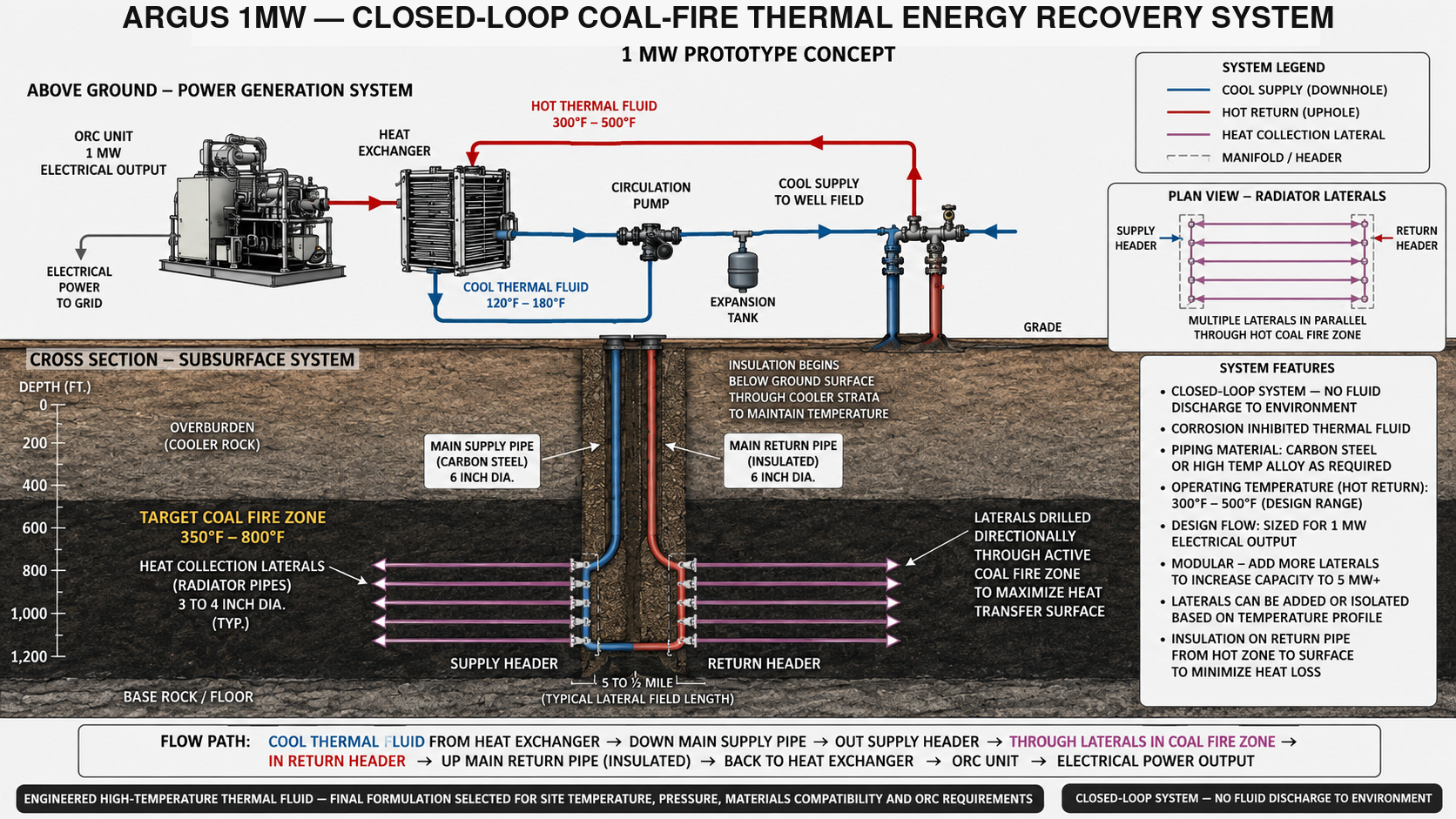
Fig. 1 — ARGUS 1MW Closed-Loop Coal Fire Thermal Energy Recovery System
THE ORIGINAL VISION, ADVANCED
From the original ARGUS A1 to a modern modular power system.
The original ARGUS A1 established the vision: capture subsurface heat in a self-contained system and turn it into continuous power. Today's modular design advances that idea with directional drilling, a sealed thermal-fluid loop, surface heat exchange, and modern Organic Rankine Cycle equipment.
PROTOTYPE & DEMONSTRATION
ARGUS 1MW
Designed to validate site performance and establish the commercial pathway.
COMMERCIAL MODULE
ARGUS 5MW
Designed for strategic placement across qualified underground heat zones.
~1 MW
initial pilot target
24/7
baseload potential
Closed loop
isolated working fluid
Modular
path to 5 MW systems
THE OPPORTUNITY BENEATH US
Underground coal fires waste heat while damaging the land above.
Underground coal fires can burn for decades, releasing heat and gases, destabilizing land, damaging roads and structures, and leaving surrounding property difficult or unsafe to use. Colorado Power Tube calls this a geomagmatic approach: directional drilling places a sealed circulation loop near an existing subsurface heat source, gathering useful heat without extracting fuel, producing groundwater, or adding combustion.
01
Reach the heat
Directional wells place the closed-loop heat collector in a suitable high-temperature zone
02
Move it safely
The sealed working fluid circulates continuously, transferring heat to the surface without open combustion
03
Generate power
Surface ORC equipment converts thermal energy to electricity for grid interconnection
04
Measure impact
Subsurface thermal response is documented to support remediation and replication
GEOTHERMAL ENERGY COMPARISON
Two ways to develop subsurface heat.
CONVENTIONAL GEOTHERMAL
Built around the resource
- —Requires specific geological conditions — high-temperature rock, natural permeability, or steam
- —Often produces geothermal brine or steam that must be managed
- —Site selection is constrained by natural resource location
- —Large capital requirements for exploration and resource confirmation
- —Limited to regions with favorable subsurface geology
COLORADO POWER TUBE
Modular closed-loop recovery
- →Uses a sealed working fluid loop to gather subsurface heat without producing groundwater or steam
- →Designed for no direct air emissions from the underground heat recovery loop and no added combustion
- →Commercial planning targets modules that can support approximately 80 on-demand heat corridors
- →ARGUS 1MW and ARGUS 5MW systems are designed as scalable power modules
- →An emerging growth opportunity for stranded subsurface heat
System performance projections are based on engineering estimates and design targets. Actual output will depend on site-specific conditions confirmed through field characterization and test drilling.

PILOT IN DEVELOPMENT
Proving a 1 MW system in the field.
Colorado Power Tube is assembling the technical, site, regulatory, and commercial partners for an approximately 1 MW demonstration at a qualifying underground coal-fire location. Field characterization and test drilling will determine final output.
THE PILOT IS DESIGNED TO
- →Demonstrate continuous heat recovery
- →Target approximately 1 MW of power
- →Document subsurface thermal response
- →Establish a replicable project model
BUILT THROUGH PARTNERSHIP
We're bringing the right people to the same table.
Agencies & land stewards
Mine-fire expertise, site access, remediation alignment, and public engagement.
Engineering & technology
Directional drilling, high-temperature materials, heat exchange, and ORC systems.
Utilities & capital partners
Interconnection, power purchase pathways, project finance, and replication.
LET'S TALK
Some of the world's most overlooked energy is already burning.
If you manage a coal-fire site, build thermal power systems, represent an electric utility, or invest in first-of-a-kind energy infrastructure, we want to hear from you.
Jeffrey Edens, Founder